
Some of you may know that I have three daughters. My eldest daughter, a senior in college, was finally able to visit this week for the first time. It was a blessing to be able to spend precious time together, of course, but something happened that I did not expect.
Where I saw a miserable, grey downpour, focused only on how it would affect my drive that day, she was mesmerized by low clouds as they hugged the mountains, gossamer wisps dancing among the peaks.
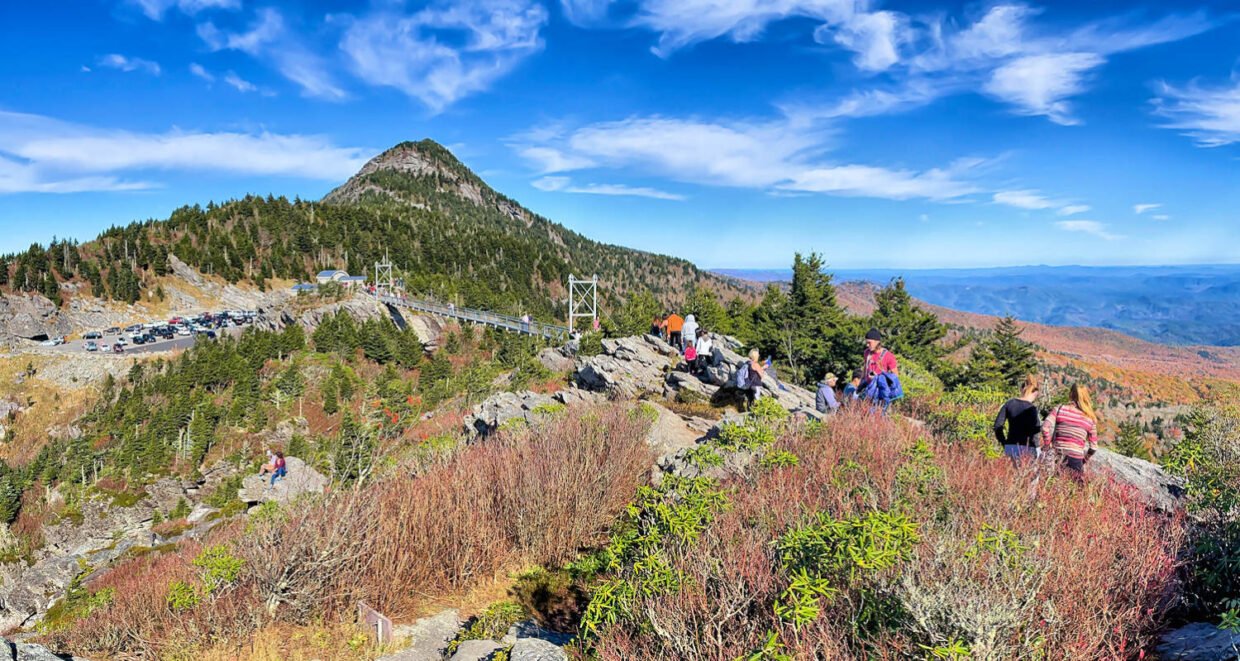
Where I looked out on ridge after ridge stretching to the horizon and saw mountains, they’re just mountains, a whole lot of mountains, right? She saw ridges of blue, one after the other, layers of beauty as far as the eye could see. “How is this real?” she asked.
Where I am used to the calm and beauty of Bass Lake — something that’s easy to take for granted — she was noticing the fine details. Turtles on logs, white water lilies, birds darting here and there.
And that’s when I saw it. Through her eyes, her reactions, I was able to see the beauty and majesty of our mountain home as if for the first time. I had seen the same lake, the same clouds, mountains and valleys day after day, but I didn’t have her vision.
Sight is not the same as vision. When our sight is evaluated by a professional, it measures how well an object is seen. Are we at 20/20 or 20/80? Are things blurry or clear? Choose one or two.
But vision is different. Vision is how we derive meaning from what we learn of the world around us. It isn’t merely about sight. Our senses and minds work together. First we perceive objects whether through sight, touch, scent, sound, taste even. Only then do we apply meaning and interpretation. Vision is learned. When babies put objects in their mouths, they learn how they feel. Researchers explain that when they see the same object again, say a banana, they can feel the texture again simply by looking at the object. Our senses working together, that’s vision. Vision brings us into time and space, past and future.
This Shabbat is known as “Shabbat Chazon” — the Shabbos of Vision. The name is taken from the first word of the special Haftarah, or prophetic, portion we read on this Shabbos before Tisha B’Av. The Ninth of Av is a fast day that commemorates the destruction of our Temples. The words of Isaiah we chant tomorrow are a pronouncement of doom coming upon the people of Judah and Jerusalem for their ethical sins and moral failings.
The opening word, “chazon” is not a common word for prophecy. Our sages teach that it is only used for the harshest of reckonings. The Kingdom of Judah and the city of Jerusalem were no longer standing up for the rights of the widow or orphan. They trampled the poor and needy, they abandoned the teachings of the Holy One of Blessing and brought empty, unwanted sacrifices to a hollowed out Temple. For these sins and more, Adonai decreed that there must be a purification and purgation of the Land.
Isaiah saw their sins with his very eyes. But his vision was one of a Zion filled with justice and righteousness, a city where holiness in deed matched holy words. He was envisioning who they could be: a Kingdom of Priests, a City on a Hill. He saw beyond the present moment to a higher, better version of the Jewish people that could one day come to be — with God’s help.
Think. Where in our own lives are we stuck in empty, repetitive actions? What would it take for us to align our deeds with our highest values? Maybe it means looking closely at our faults — we all have them, we’re all human. Maybe we look at how we treat others. Who are we taking for granted? Who are we ignoring? And what are we assuming instead of learning, asking, discovering? Maybe it means forgiving those who need forgiveness and patience. Perhaps we rededicate ourselves to good causes, let go of hurtful habits, and begin to move towards our true potential, no matter what our age or situation.
Sight is not enough. Our senses alone are not enough. We can only move forward with thoughtfulness, learning, and vision.
A maise brought down by Rabbi Moshe Weinberger.
A doctor in the Israeli city of B’nei Brak, Moshe Rothschild, once had a practice in Rome. He had been there many years, he had stopped seeing what was right before him.
One night in the middle of a heavy rainstorm, he got a call. Thinking it a medical emergency, he picked up. It was none other than the Ponevezher Rabbi. This was one of the greatest rabbis of his generation, he helped rebuild Judaism and yeshivot after the war.
The Ponevezher Rav said, “Mosheleh, Mosheleh kum schnell, come right away. We have to go someplace. We must go.”
“Rabbi, there’s a terrible rainstorm, and it’s very hard to drive in this weather this late at night. Can we go first thing in the morning? Wherever you want to go, Rabbi, I’ll pick you up and we’ll go.”
“I just arrived here in Rome and I cannot calm myself down. I have to go somewhere, please come right away to take me.”
So the doctor went to pick up the Rabbi. “Dr. Rothschild, nos’im le-Sha’ar Titus. We have to go right away to the Arch of Titus.” The lateness of the hour didn’t matter, nor did the downpour.
Now, you may have seen pictures of the Arch, maybe you’ve seen it in person. It’s an immense arch built after the destruction of the Second Temple. It shows the soldiers carrying away the treasures of the Temple including the ark and the menorah. The strength of Rome and its gods. The defeat of Hashem. The end of a civilization. In other words, the end of the Jews.
“Why do you want to go to the Arch? It’s ancient history.”
“Please, Mosheleh, I need to see the Arch.”
Despite the downpour, the Rav got out of the car. He straightened his tie, stood tall, fixed his beard, and looked up at the arch as the rain ran down his face, under his collar, soaked through his coat.
He looked at the arch with its silent friezes, its frozen moments, and he began to yell.
“Titus! Where are you? Hineh anachnu kan v’eifo atah? We’re here, but where are you? The Jewish people are here. You killed us, you slaughtered us, you destroyed the Beis HaMikdash, didn’t you? Didn’t you?”
A flash of lightning filled the sky, thunder underlining his words.
“Here I am, the Ravof Ponovezh representing the Yeshiva of Ponovezh built after the Holocaust. Look what we are building! The Jewish people are blossoming despite your hatred, despite everything you did! Answer me, Titus, what’s left of the Rome that you built? All that hatred and bloodshed, now you are nothing but a memory lost to time, washed away and forgotten like tears in the rain.”
Our sages teach that in the future, in the time of Mashiach, every fast day will turn into a feast day, but we can find joy in Tisha B’Av right now.
In Yiddish we sing, “Mir zaynen do.” We are here. We outlasted Egypt, Babylon, Assyria, Persia, Rome, the Nazis, and the Soviets. All dust.
We must take comfort in our very existence. Our survival proves God’s promise. Our enemies today seem many, they seem to be growing, they seem to be powerful. So did Titus. One day, they too, b’ezrat Hashem, will be seen only in museums and ruins. And we shall feel the rain wash away tears as we stand strong and continue.
This morning my daughter and I hiked the Trout Lake trail. Sunlight dappled through trees, the air was still and cool. Walking together, grateful to be with her, my heart was full, my eyes were clear, my vision restored.
As we walk together, may each of us look within to our best selves, may we strive to live up to those best selves, and may our vision extend beyond yesterday, today, or tomorrow into the infinite future of joy prophesied by Isaiah:
For as the new heaven and the new earth
That I will make
Shall endure by My will —declares GOD—
So shall your seed and your name endure.
(Isaiah 66: 22)
Mir zaynen do. We’re still here. We will endure. We will triumph.
Let us all say, Amen.