
A story for this Hanukkah by a playwright friend of mine, David J. Loehr.
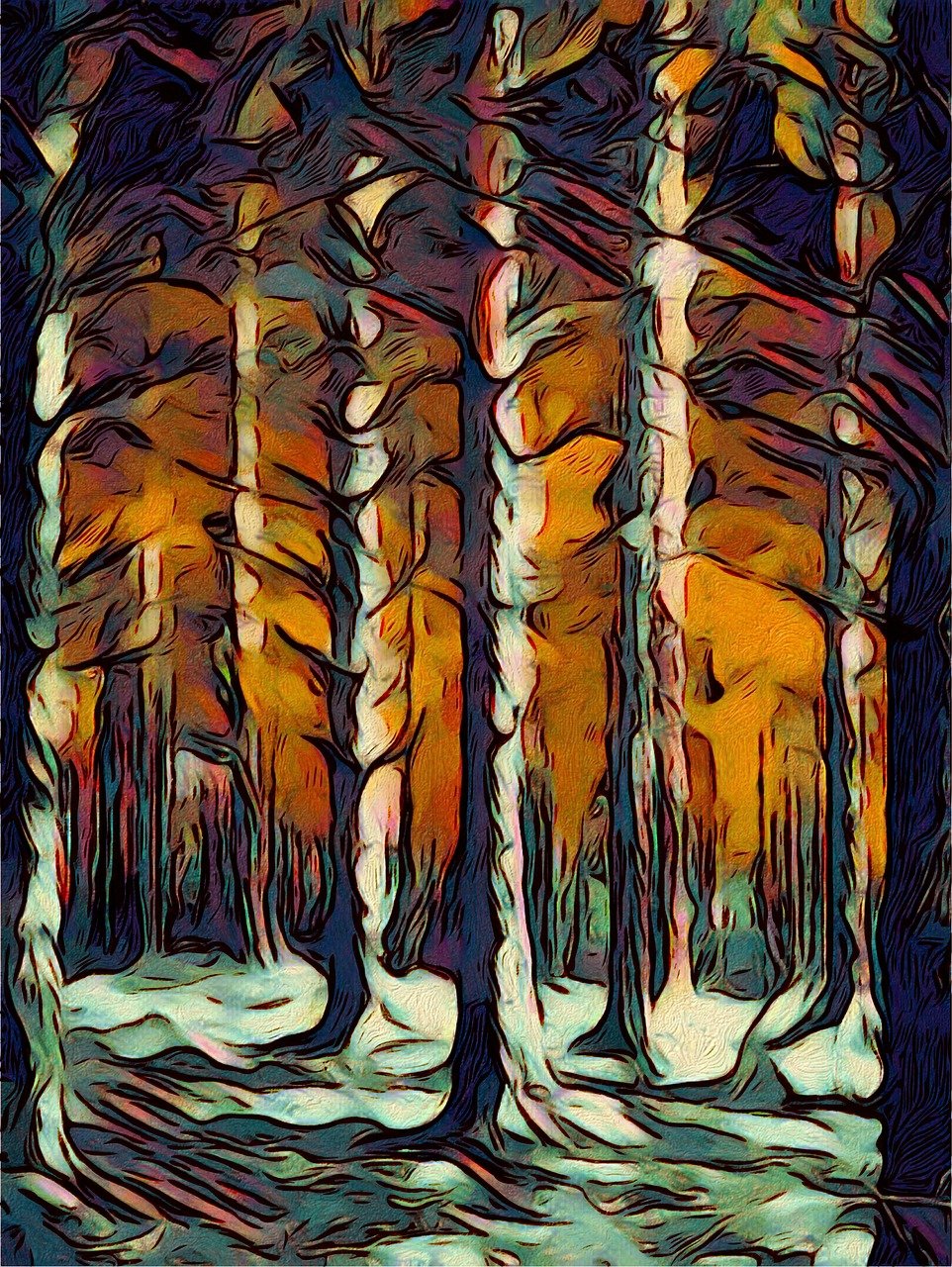
Once, long ago, a man was lost in a wood.
His name…well, his name isn’t so important—it could be any one of our names after all. But I guess we need a name to get to know him, don’t we? How about we call him Yitzhak, which comes from the Hebrew tzachaq, meaning to laugh. This is fitting, as he himself loves to laugh and to bring laughter to those around him.
Right now, as we meet him, he is wandering in a wood both dark and deep. He is alone, he is lost, and despite his good nature, he is beginning to worry. Night is falling and falling fast, and he needs a place to rest.
As if by magic, a flicker of light in the distance grows to become a small cottage the closer he gets. It looks oddly familiar, but he pays that no mind. He goes to knock on the door, but it’s already open. “Hello?” he asks, “Is anybody home?” but there is no answer. He steps inside because it is getting later and darker and colder, already he can barely see the road before him. Surely the owners will not mind, they live in this wood, they will understand.
Once inside, he sees a menorah and candles, and he realizes that this is the first night of Hanukkah. But it is not for him to light their candles, he thinks. So he waits.
Outside, the darkness is full and complete. Yitzhak cannot see the path that led him here, he cannot see how anyone else could find their way. As minutes turn to hours, he decides to light the first candle himself. Surely they will not mind, they will understand.
With the morning light, Yitzhak awakens to find that he is still alone. He had hoped to thank the owners at the very least. Soon, he sets off into the wood again, hoping to find his way home.
Sure enough, day turns toward night, and again, Yitzhak must find a place to rest. These woods are confusing, the paths seem to circle in and out of one another, or maybe everything looks too similar? It’s hard to say. At the moment he starts to worry, again as if by magic, a flicker of light rises, beckoning him forward.
He comes to the door of this cottage, and just as before, the door is open, no one is home, and Yitzhak steps inside. It seems familiar to him, but he can’t say why. Sure enough, there is another menorah, another night of candles to be lit. Still, he waits just in case. Eventually, he lights the candles and settles in to doze until these owners return.
Dawn breaks and again, Yitzhak finds himself alone. He leaves a note to thank the owners of this cottage and wishes he had thought to do that the day before. Soon, he sets off once again, hoping this day, he will find his way out of the woods.
Well, you know how these stories go. A third night, another cottage, another night of candles to light. The next morning, he leaves a note of thanks and a token, a piece of gelt he’d been bringing with him for his own children. And he wishes he had thought of that the previous days.
Another day of circling through the woods, and another, and yet another. Each night, Yitzhak finds himself at yet another cottage—all of them similar and familiar, but maybe they were all from the same builder? And each night, he lights another round of candles and settles in to wait for that cottage’s owners…or daylight, whichever might come first. And each morning, a note, a piece of gelt, and soon, a blessing on that day’s cottage for giving him refuge in the cold and the dark.
The sixth night, Yitzhak is hungry. Walking in the woods can be tiring day after day. Of course, the cottage he finds that night has a feast set out—and still warm! There is no one to eat it, no one who could have cooked it, but it is there nonetheless. After he eats his fill, he pauses to thank Hashem. “For all this, I thank you and praise you, may your name be praised forever.” The next morning, still alone, he leaves a note, some gelt, a blessing, and some money to pay for the feast.
On the seventh day, he walks through the wood, trying to orient himself by the sun and soon the stars, what stars he can see through the canopy of leaves and branches. He thinks to himself about routine and habit, how much of his life has been these cycles of days, seven days and seven, over and over. How long has he been focused on tasks that needed doing, over and over. How he has forgotten to stop, to rest, to see the world around him.
“And yet, what is there to see?” he thinks. “Trees and darkness and the occasional cottage.” He tries to remember a time before he was wandering in this wood, and he finds it difficult. Surely he has a family—why else would he have such gelt? Surely he has a home—these cottages have all reminded him of it, but the longer he has been away, the harder it is to remember, the harder to see.
Lighting candles each night, thinking about this tradition, the lights, the miracle…this has been a comfort to him. He thinks of his family—his people—all of them lighting their candles each night, and he knows…he knows he is not alone. A seventh night, a seventh set of candles, another light feast, and Yitzhak falls fast asleep.
On the eighth day, Yitzhak stops along the trail. He wonders if this is his life now, wandering the woods from cottage to cottage. “Could be worse,” he thinks. “Could be a desk job.”
He rests for a moment and then he thinks, “At least it hasn’t been raining.” Then he realizes the trees need that rain. Why should he mind? “Into every life, a little rain must fall, after all,” he thinks. At that, he feels a raindrop, then another, and soon a light drizzle. It feels nice…it feels like life, after all. He listens to the raindrops dancing off the leaves and laughs.
Sure enough, an eighth night, another cottage, another menorah. He can’t shake the feeling that this cottage seems strikingly familiar, even moreso than the rest, but he has no words to explain why. He lights the candles and closes his eyes to pray.
“Thank you for this life, whatever this life may be. I am here, and that would be enough.”
He is surrounded by the lights and the warmth and soon the sound…the sound? He opens his eyes to find his wife, his children, his brothers and sisters, and he realizes that he is home. He has been home every night, he simply could not see. But this night, this eighth night, this is the night of contemplation and understanding. This is the night where we stand fully in the light. Surely we will understand.
How many of us know someone who’s lost in the woods? How many of us are wandering in the woods ourselves, unable to see our families for the trees? How many go through endless tasks day in, day out, over and over without a pause to give thanks, without a moment to stop and listen to the rain. Or to hear one another?
Let us take the time these nights of Hanukkah—and really, every day—to contemplate and try to understand.
Let us live like Yitzhak: awakened, loving, and loved. Shabbat shalom.