
Fourth in a series of five sermons on Sacred Mountains
How many of you are baseball fans? How about those Blue Jays? Tonight might be it, we’ll see.
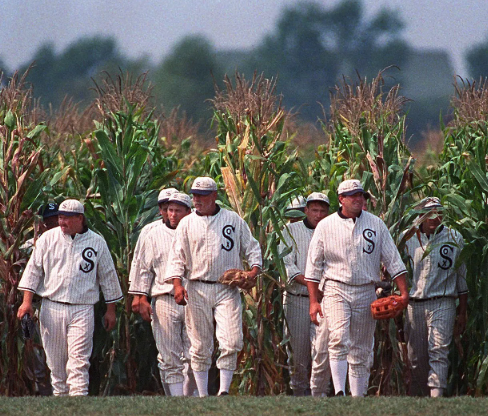
Now, do you know the movie Field of Dreams? It tells the story of a farmer named Ray who hears a voice one night while walking through his cornfield. It whispers to him, “If you build it, he will come.” So he transforms a portion of his cornfield into a baseball diamond and…you should see the movie, it’s a lovely story. It uses baseball as a metaphor for something pure and good that stands the test of time, something that can transform both the past and the future.
It reminds me of this week’s mountain, Mount Zion, but with a twist. “If God builds it, they will come.”
The name “Zion” appears in the Tanach in reference to the original, ancient Jerusalem. In that time, the City of David was also called Zion. During the time of the prophets, Jerusalem in its entirety was also called Zion. In the biblical imagination, the city of Jerusalem was understood to be the seat of God’s judgement, and the city of Zion the seat of God’s mercy.
Hey, I never said this would be simple.
This is the most complicated mountain we will encounter because in the Middle Ages, Byzantine pilgrims thought that the hill located south of what we know as the Old City’s Armenian Quarter was part of ancient Jerusalem and named it “Mount Zion.” They were mistaken. If you’ve visited Dormition Abbey right outside the Zion Gate, then you’ve been on what they thought was Mt. Zion. But this is only the western hill.
You can see the error here:
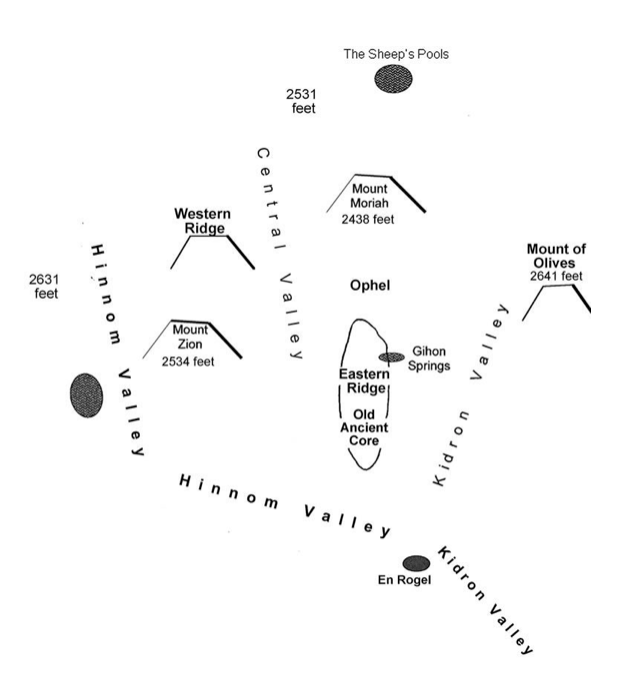
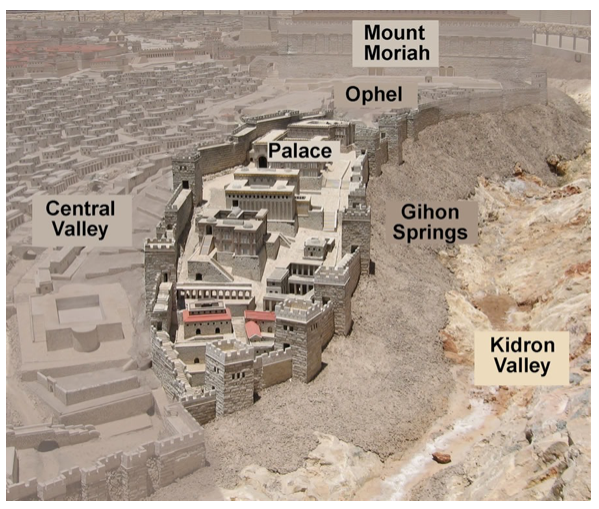
This error was not recognized until 150 years ago when archaeological evidence suggested, and has now conclusively shown, that the city captured by David was on the smaller, lower hill located to the south of the Temple Mount — the modern-day City of David archaeological site. It was on the Eastern Ridge. That was Zion.
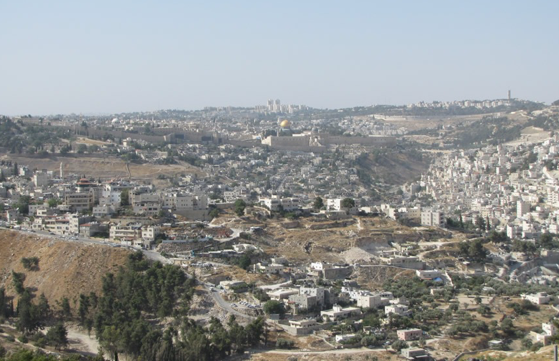
That lower hill was the site of the Jebusite city which became King David’s capital and constituted the whole of Jerusalem for probably more than 200 years until gradually expanding westward and incorporating the area known today as Mount Zion. The Arabic neighborhood of Silwan is on the eastern ridge now.
Tonight we are in the book of Isaiah. He preached in a time when the Kingdoms were split, and when moral rot and idolatry were rampant in the Kingdom of Judah.
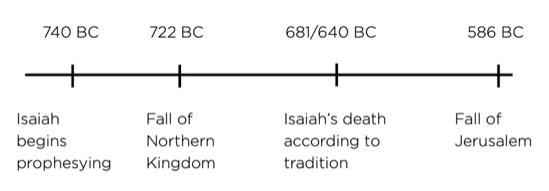
The Jews of Judah still brought offerings and sacrifices to the Temple, but their society was no longer just or moral. They were going through the motions but had lost the true teachings of righteousness based on the commandments of Moses. In his opening chapters, Isaiah foretold their downfall in no uncertain terms.
A yawning gap had developed between the idealized Zion — also called the joy of the world — and the real Zion. In the idealized Zion, there was a just king. The words of Torah flowed freely. It was heaven on earth.
In the real Zion, there were irresponsible leaders, wealthy citizens who did as they pleased, injustice in the streets, and rampant abuse of the poor. In Chapter 1:4 they are called a “sinful nation! People laden with iniquity! Brood of evildoers! Depraved children!”
Their downfall and doom was guaranteed. But a small remnant would be spared with a chance for hope and restoration. How do we get from this fallen kingdom to the beautiful mountain Isaiah describes in the next chapter?
In chapter 2 we read the famous words,
In the days to come,
The Mount of Adonai’s House
Shall stand firm above the mountains
And tower above the hills;
And all the nations of the world
Shall flow to it.
And the many peoples shall go and say:
“Come, Let us go up to the Mount of Adonai,
To the House of the God of Jacob;
That we may be instructed in God’s ways,
And that we may walk in God’s paths.”
For Torah shall come forth from Zion,
The word of Adonai from Jerusalem.”
It is important to know that Zion was not a tall mountain. It wasn’t Sinai, Carmel, or Tabor. Nonetheless, in this prophecy, it rises above all others, towering over all. In this vision, the non-Jewish nations flow upwards into the city of Jerusalem and to the holy mountain. Now if you’ve hiked in mountains, you know that water doesn’t flow that way. So why describe it like that?
Because this is a return, streams of people returning to their ultimate source. All will come to acknowledge the one true God, Adonai. They walk together in the light of Torah. Following these words, we hear the well-known prophecy of swords beaten into plowshares, spears into pruning hooks. Peace and goodness will reign.
Two mountains. One idealized, one reality. Two choices of direction. The question both then and now: how can we bridge that gap?
The medieval French commentator, Rashi, parsed these verses and brought down ten concrete steps of teshuvah, return, based on Isaiah’s rebuke, that can bring us from a polluted Zion to a purified Zion, one that has been redeemed at last. Zion broken to Zion restored.
Step one: We wash away the stains of our behavior. Step two: we purify with the mikvah, going to a deeper level to be reborn and renewed. Steps three and four: we turn from harm and break from negative patterns and habits. These first steps are centered around the repair of the self. We can only make larger changes if we focus on our own avieras and misdeeds first.
Steps five, six, and seven are about restoring a moral order to society. When we study ethical behavior, create a society of fairness, and take up the cause of the powerless, we begin to bring wholeness to the damaged mountain.
The final steps, finding justice for the orphan and pleading the case of the widow, bring us to a renewal of relationship with the Holy One of Blessing. Only when our inner convictions match our external actions can Zion be healed.
We read in Isaiah 1:27, “Zion shall be saved by justice, Her repentant ones by righteousness.”
The Jewish vision of the world at the End of Days is not one of blood and suffering. It is not a kingdom of David or Solomon. No, it is a vision of the pure waters of Torah cascading down to the many nations who join us on our holy mountain. The ancient dispersion of nations after the Tower of Babel is reversed. They will come to us to learn, not to destroy. ‘If God builds it, they will come.” We do not seek to hoard or hide Torah — the gifts and blessings of God’s instruction are meant to be shared. Torah will be a living current pulsing through a world brought to recognition and reconciliation.
How do we get there? It starts with us.
Already, our promises from Yom Kippur are fading away. We may be slipping back to unhealthy habits and ingrained behaviors. Every time we stand up for the poor and hungry, every time we vote our conscience, every time we fight for the excluded and powerless — we move closer to Zion. Judaism’s kingdom is built on our hearts turning, our souls renewing, and our people uniting to create a society based on the truths of Torah.
In Field of Dreams, the writer Terrance Mann assures Ray that people searching for something pure and untainted will find the baseball field buried in his cornfield. He says…
“…people will come, Ray. They’ll come to Iowa for reasons they can’t even fathom. They’ll turn up your driveway not knowing for sure why they’re doing it. They’ll arrive at your door as innocent as children, longing for the past…America has rolled by like an army of steamrollers. It has been erased like a blackboard, rebuilt and erased again. But baseball has marked the time. This field, this game: it’s a part of our past, Ray. It reminds us of all that once was good and it could be again. Oh… people will come Ray. People will most definitely come.”
Forgive me, I’m not James Earl Jones. But the point stands.
What was good once can be good again.
If we stop believing, if we stop aspiring to a better world, we will be the fallen kingdom Isaiah so rightly castigated. Judaism has never ceased — not in 3500 years — to believe that one day, with God’s mighty hand, Torah will surely flow from the heights of a Zion restored and redeemed.
May it do so quickly and in our day.