
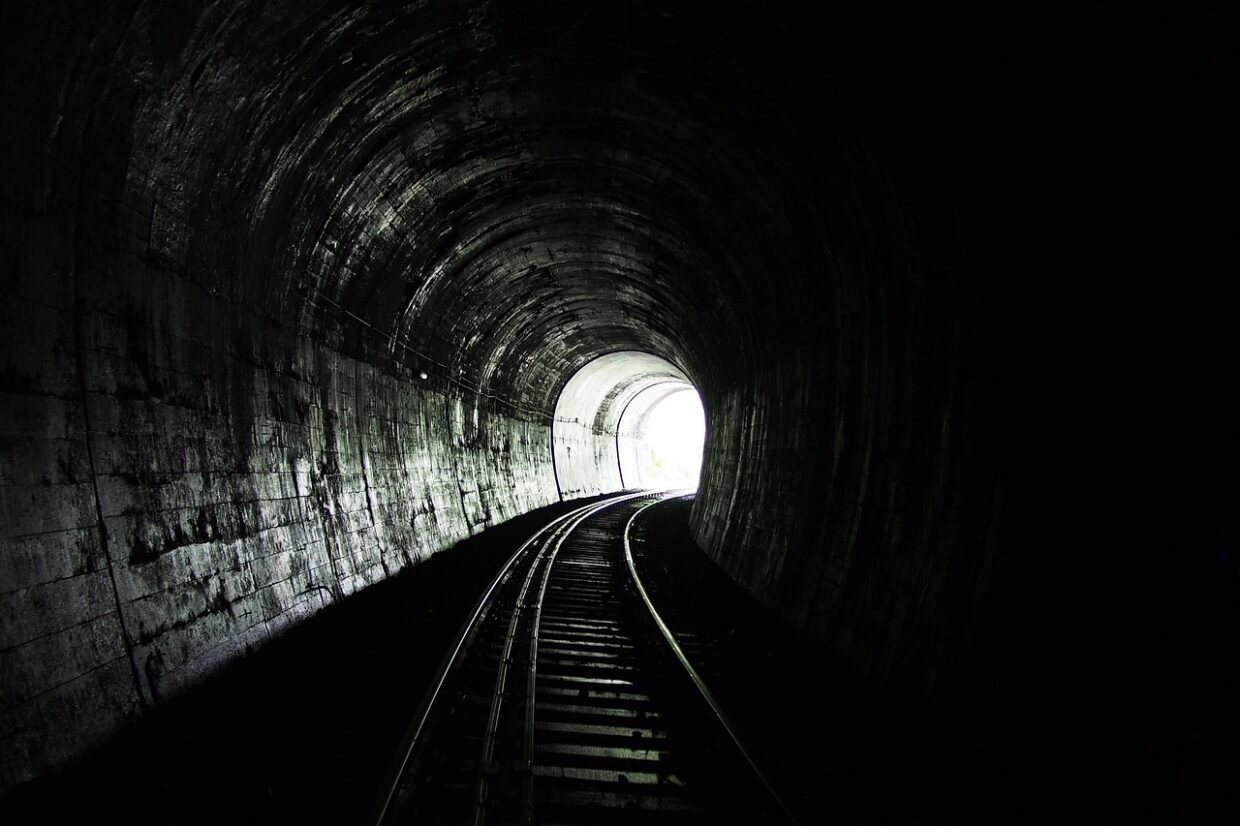
Life can be difficult, yes? We all know this. Sometimes, it feels like you’re in the dark, looking for a light at the end of the tunnel. Other times, that light might be a freight train barreling down on you. And sometimes, sometimes the waters part and make the way clear.
Tomorrow we will gather to celebrate the seventh day of Pesach, recite Yizkor for our loved ones, and hear the recitation of Shirat HaYam — the Song of the Sea.
It is one of the most challenging portions to chant in the entire Torah. In fact, this song, as well as the Ten Commandments, were the final tests for our Torah cantillation class in Jerusalem under the instruction of Dr. Eliyahu Schleifer. The challenging Hebrew and unique melodies make it a difficult portion to master. And yet, this song is recited daily in the morning prayers. It is also known by its opening words, אָ֣ז יָשִֽׁיר־מֹשֶׁה֩ “Az Yashir,” “Then Moses sang.”
This is not the first time that the little word, “az” (meaning then or since) appears in the story of Exodus. In chapter 5 verse 23, the same word appears in a conversation between Moses and God. Moses has requested that the Israelites be allowed to go into the desert to serve God. Instead, Pharoah decides to further punish the slaves by refusing to give them straw to make bricks while still requiring that the same amount of bricks be crafted. Moses states, “וּמֵאָ֞ז בָּ֤אתִי אֶל־פַּרְעֹה֙” “Ume’az bati el Pharoah..” “Since I have come to Pharaoh to speak in Your name, he has harmed this people and You have not saved Your people.”
What is the connection between the increased suffering and the exalted music of the final redemption? An aleph and a zayin. Az.
Author Alana Apfel notes that the use of this critical word “az” in both places means that the song itself did not begin at the sea, it did not begin between the walls of water, it did not even begin when Pharaoh drove his army between those walls in pursuit. No, it began in a place of pain and and deep suffering. At our lowest moment, when the most impossible labor became even harder, when even straw was taken from us — az, a song was born.
When we sing to God, when we magnify Him, Torah teaches us that we also have to encompass the sorrow and struggle that has come before. Az. There can be no redemption and no freedom without carrying the anxiety, pain, and suffering with us. They are inextricably linked. We cannot simply forget them and continue, oblivious.
On some level, each of us knows exile, slavery, and torment. Our personal galut may be psychological, physical, emotional, or situational. It may be at home or school or work. What is important to remember is that this too is connected to ge’ulah — redemption.
Everything we experienced in Egypt led to the parting of the waters, even those moments without hope or light. What does this tell us? Everything that holds us down, every restraint that holds us back, every person that holds us in invisible chains of abuse or deprivation…is also woven into the tapestry of salvation and freedom.
This little word, “az” comes one more time in the Song of the Sea, this time around the reaction of the gentile nations. The Midrash teaches that when the Sea of Reeds split, all the bodies of water in the entire world also split. It was not just a localized phenomenon. Our enemies were frightened and stunned.
In Exodus 15:15 we read: אָ֤ז נִבְהֲלוּ֙ אַלּוּפֵ֣י אֱד֔וֹם
Then the chiefs of Edom panicked, the mighty men of Moav were seized with trembling; all the inhabitants of Canaan melted away.
All the nations experienced a complete upheaval of the natural order. How each group reacted defined them.
At first, the Israelites responded with fear — yirah — as who wouldn’t? But soon, it grew into awe.
In Exodus 14:31, right before we sing, we read וַיִּֽירְא֥וּ הָעָ֖ם אֶת־יְהֹוָ֑ה — “The people held Adonai in awe.” We were able to translate that fear into a deep and indescribable joy which manifested in the bursting out in song in the very next verse.
For Judaism, awe and joy are two sides of the same coin. We are called in Psalm 2:11 to, “Serve Hashem with awe and rejoice in trembling.” We harness our fear into song. Our shaking limbs and disbelieving eyes are able to achieve the heights of revelation and connection to the Holy One of Blessing.
But what did the other nations do?
Az. They trembled. They feared. But there they stopped and could go no farther. They melted away, silent as stones. They saw the mighty hand of God overturn the laws of nature and, faced with an awesome impossibility, they were paralyzed. Our text teaches that, quote, “Canaan withered.” All was emptiness and futility. Why didn’t they start to sing like we did? We will never know for certain, but we do know this. Not one word escaped their lips.
Redemption was wasted on them.
In this life, each of us will be overwhelmed at times with sadness and fear. The question is which “az” will we choose? “Az yashir” — “Then they sang” or “Az nivhalu” — “Then they panicked?” The choice is yours.
On Tuesday, driving with Emma and Elizabeth in North Carolina, we almost got hit by a freight train. That’s not a metaphor, I mean an actual freight train. The railroad track was sunken INTO the roadbed on the highway to Charlotte. I had never seen this before, but it’s apparently pretty common in the south and the midwest.
Red lights started flashing overhead but I didn’t see any signs or anything that looked like a train track. I didn’t know what was going on. One minute, we were going 50 mph on a state highway, and the next minute, these lights started. Reflex told me to slow down, so I stopped, and good thing I did, because a crossing rail came down right in front of us with almost no room to spare. Even then, I didn’t see the train track.
Not ten seconds later, there was the loud blast of a horn and a freight train barreled through. Then…silence. The gate went up, the lights stopped, and the way was made clear. I was pretty shaken up to say the least. I feel that God’s hand was protecting us.
I won’t lie, there was a moment of panic, understandably so. And yet, here I am not three days later, singing.
There is one more thing I want to share about this little word, “az”. Did you know that it’s not only in the past tense but the future tense?
“THEN Moses and the children of Israel will sing.”
When will we sing again? At the End of Days. The Chassidic Master, Rebbe Nachman, speaks at length about a special song that will be awakened in the future, a song that will be used by Mashiach to guide people out of the depths of sin.
We will sing once more in the future when the final redemption saves us for all eternity.
We will sing this song that began in the depth of our enslavement and suffering.
We will sing a song of hope and healing, a song where fear turns to faith…and the way is made clear.
May we each of us sing ourselves into lasting freedom.