
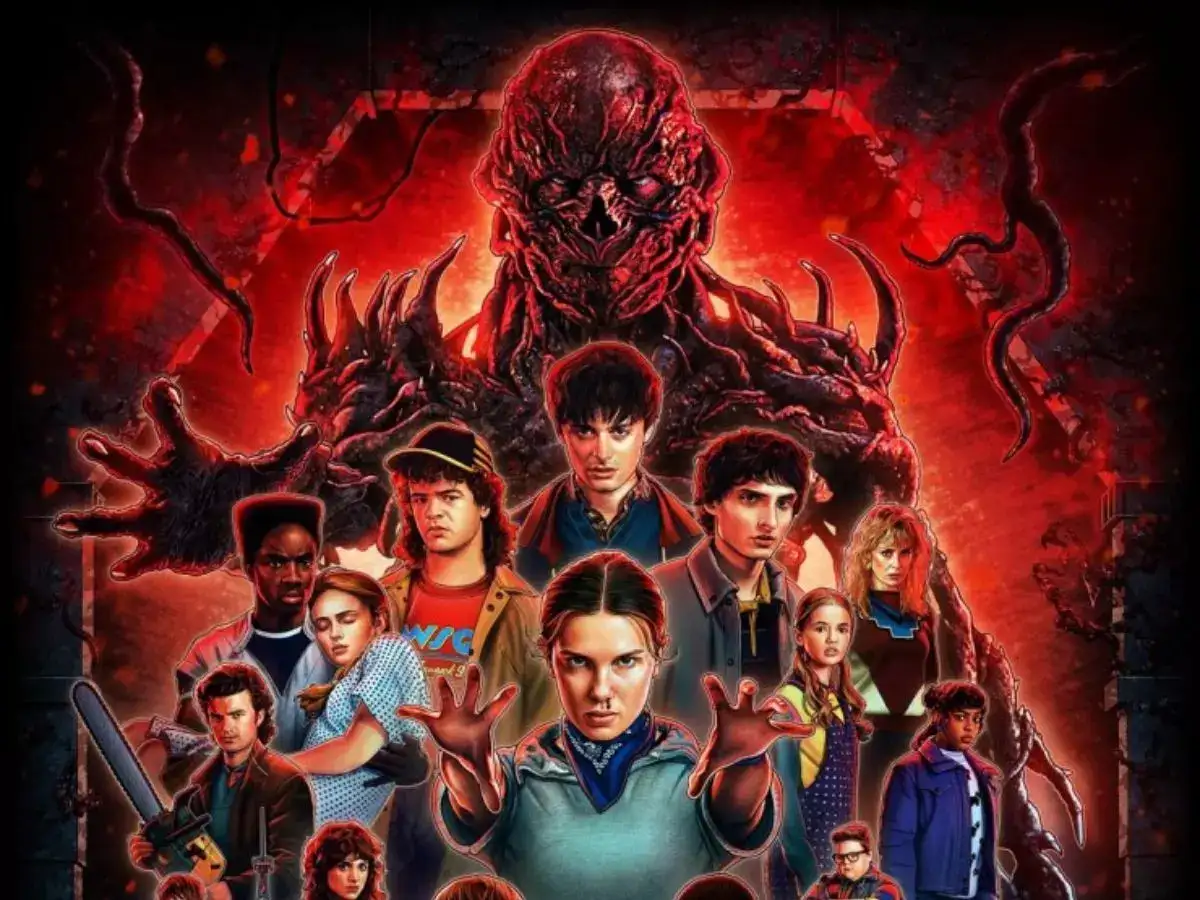
After ten years, five seasons, and forty-two episodes, the Netflix series Stranger Things came to a conclusion on New Year’s Eve. Have any of you watched it? My daughter Emma and I are big fans. I started watching with her several years ago when she was old enough not to have nightmares from the monsters and such. We would snuggle up on the couch, popcorn and chips ready to go, and we’d binge watch the heroic efforts of a group of kids trying to save the world from a parallel universe of death and danger that they called the Upside Down.
No spoilers here, but for me, the finale stuck the landing. It was a beautiful conclusion for a show that taught important lessons about found family, sacrifice, and the power of never giving up.
One line has resonated in my mind since Wednesday night. The main characters, now high school graduates, are gathered in the same basement where the series began. One by one, they assert a faith that isn’t based on certainty or a visible ending. They have two choices — they can hold onto hope or give in to despair. As the camera pans around the table, each of them says, “I believe.” Ani ma’amin.
They have faith in the story even when they cannot see its end. This is key to their growth and their journey. This is the core of who they are as people. And it’s a good lesson for all of us.
When God doesn’t give us a date, God gives us a direction.
This week in Parshat Vayechi we are also at the end of an epic. Genesis is ending. Jacob is on his deathbed, his children and grandchildren are gathered for his final blessing. The family doesn’t know this, but they are about to descend into 210 years of torture and bondage.
Jacob gathers his family and says, “Come together that I may tell you what is to befall you in days to come.” (Gen 49:1) The phrase for “days to come” is, “בְּאַחֲרִ֥ית הַיָּמִֽים” and our sages are in agreement that this means the time of the coming of Mashiach. The children are breathless, waiting for this incredible revelation. But there’s a glitch. Nothing more is said. There is no timeline. There is no schedule. There is no certainty.
Rashi, Ibn Ezra, and Ramban all agree that the Shechinah, the indwelling presence which had been near Jacob, fled. He didn’t get the timeline and therefore couldn’t share it.
This frightens Jacob greatly. In his final breath, he was alone without Hashem’s guidance and presence. According to midrash, he begins to wonder if like Abraham who had Ishmael and Isaac who had Esau, he too had wicked sons. His sons, to assuage him, spontaneously say, “Shema, Yisrael, Hear, O Israel (meaning their father, Yisrael), Adonai Our God, Adonai is One.” By which they meant the Gemara clarifies, the same way you serve only one God, so too do we. He responded, “Baruch shem kevod malchuto le-olam va’ed,” Blessed is the Name of the Honor of God’s Kingdom forever. And the watchword of our faith was born.
It was in that moment of confusion, a moment when the ultimate end was hidden, that covenantal unity and trust came into this world. When the road ahead is unclear and mysterious, we too can cling to our faith, our family and our God. “Shema Yisrael,” “Hear, Israel,” “Listen, Father” — we will not serve other Gods. We will stay true.
The concealment isn’t a punishment. It is answered by a call to faith that echoes through eternity.
Our rabbis teach that there are two types of exiles.
When Israel went down to Egypt, they were given a hint that it would be no more than 210 years. When they were taken in chains to Babylon, they were told by Jeremiah that it would be no more than 70 years. But in both cases, no one knew when the count started. No one knew the “ketz” or the ending. In fact, in tractate Megillah 12a we learn that both the king of Babylon and the King of Persia, Achashverosh, made feasts to celebrate the fact that 70 years had come and gone and the Jews were still in exile.
But this was because they counted erroneously. Eventually, the Jewish people were redeemed at the correct time, and both of those kingdoms fell. The end of those exiles had at least been announced, giving solace to our people, giving them something to look forward to.
Our exile today, the final exile of the prophesied four, has no known end. If you noticed, in the final stanza of our Maoz Tzur, we just sang כִּי אָרְכָה הַשָּׁעָה וְאֵין קֵץ לִימֵי הָרָעָה “For the triumph is too long delayed for us, and there is no end to days of evil.” We believe it will end, but we have no idea of when or how. Like the kids in Stranger Things, we can only assert, “I believe.” “Ani Maamin.”
This mystery tests our faith, but according to the rabbis, it also sweetens our reward for not losing hope. When God doesn’t give us a date, God gives us a direction. We go forward as one family in hope and faith. Like the children gathered around Jacob, we say, “Shema Yisrael.” We hold fast.
I’ll admit, I cried through the last half hour of the show. I felt like those kids were my kids. Their struggles, their journey, and their growth resonated with me as a mother and, of course, as a child once as well. It was also a part of Emma’s adolescence that I felt privileged to share. Moments together. These get rarer as she grows. But it was the final end credit song that really got me.
“Though nothing will drive them away, we can beat them, just for one day, we can be heroes, just for one day.” David Bowie’s “Heroes”. Such a good song, now set in a new and beautiful context.
Jacob couldn’t give us the timeline. Right now, we may not or can not see how we get to happily ever after. It may be only happily enough for now. We Jews are in an exile our sages call, “the depths” — it is vast and dark, with “miles to go before we sleep” as Robert Frost said — but despite this, we as a people continue to take the next faithful step, and the next and then the next after that. Our history is one of ancestors who were heroes just for one day, then another day, and then another into millennia. And here we are together in Boone, North Carolina. Still taking that next step, still being heroic on whatever scale we need to be so, still holding true.
We choose courage. We choose each other. And day after day, we choose to say “Ani Maamin,” “I believe.”