
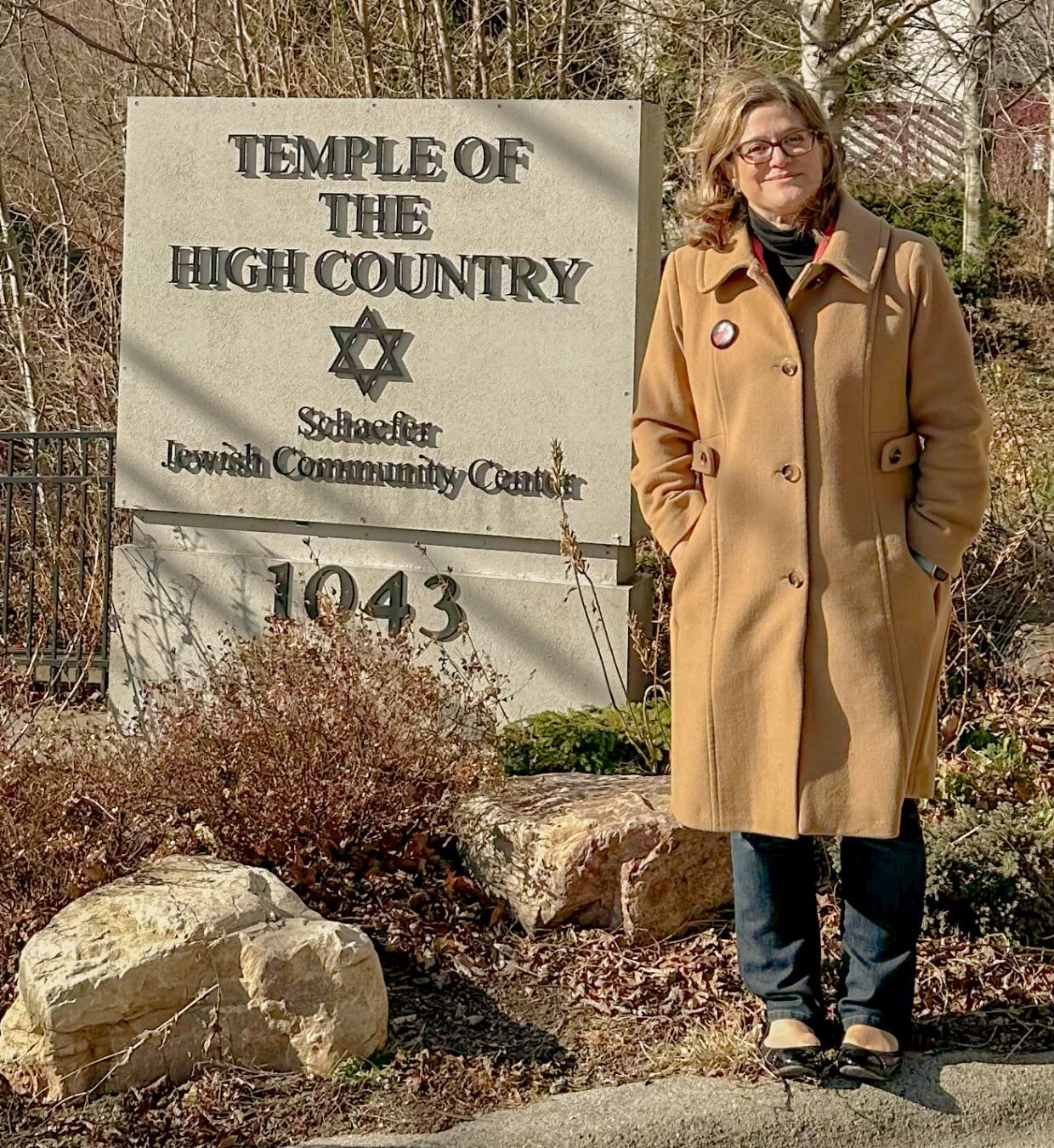
Have any of you ever picked up and moved house across the country? Better yet, have you done this while working a job, managing children, and trying to pack everything in stolen moments up until the last week? Yes? Then you know what my last ten days have been like.
First, the packing, sorting, and purging. It’s amazing how priorities change when every ounce costs money. That box of high school and college papers? Gone. Clothes that went out of style years ago? So long. All those sci-fi novels I read back in the day? Goodbye. All manner of things that seemed special when I put them away, stored them in boxes for years…and now, they’ve become “stuff,” ordinary things I haven’t touched in decades.
The day before the movers came, my eldest daughter and I packed for 17 hours straight. Once they had loaded the truck, then it was packing my car, playing Tetris for real with boxes and suitcases and a cat carrier…and a cat!
And then a two-day drive across seven states broken up with an overnight stay in a hotel. I needed the rest, and the cat needed a break. We let her out in the room to get some exercise…and she promptly vanished! Because of course! And you’ll never guess where she was hiding. Not the closet, not the bathroom. No, she somehow got up inside one of the bed frames! Good thing we took the beds completely apart! Of course, then we had to put them back together.
It all put me in mind of an old song by Stephen Sondheim about going through a lot…
Good times and bum times, I’ve seen ’em all
And my dear, I’m still here…
After a few minutes rest, my daughter, Elizabeth, and I have been busy setting up the Parsonage and, as of this Tuesday, unpacking boxes. So many boxes! We feel blessed by such a lovely home and look forward to making it our own. It’s a new life and a new start.
It’s a new song to sing.
As a rabbi who’s spent a career as a cantor, singing is very important to me.
A song is something special. We sing when joyful. We sing at a simcha. Sometimes, we sing in the shower! A song doesn’t appear in the Torah every week. But this week, in parashat Chukat, we encounter one of the most enigmatic songs in the Torah. It’s called the Song of the Well or “Shir Habe’er.”
In Numbers 21:16-18, we read it as part of their retelling of the encampments on the Israelites’ journey:
“And from there to the well: this is the well where Adonai said to Moses, “Assemble the people that I may give them water.” Then Israel sang this song: “Spring up, O well—sing to it— The well which the chieftains dug, which the nobles of the people started, with maces, with their own staffs.”
This song is a fragment from ancient songs in the Torah, most of which were lost over the millennia. There were songs to vines, vineyards, wells, and springs. Some believe these songs were chanted as the workers dug and labored, keeping them in rhythm as they toiled.
Scholars are divided on the origin of the song. Some say it reaches back to a tradition in the Negev of wells being dug by workers, then lightly covered to enable the local chieftain to use his staff to open it, thus claiming it for the tribe. Others believe it was sung by the tribal women to coax the waters up from the ground with the power of their voices. This tradition may be the source of the midrash of Miriam’s well which is said to have followed the Israelites on their journey. There is a deep connection between the life-giving waters and the generative power of women.
Here’s the thing. Water in the Torah is not “water”, H2O. No, water is blessing. As nothing in the desert can live long without water, so nothing in this world can exist without blessing.
Each of our patriarchs had a profound connection with wells and water. Abraham dug many wells around the land of Canaan. The local Philistines came and filled the wells, which were reopened by his son Isaac. Then Isaac and his servants dug additional wells, eventually settling near the one in Rehovot. Jacob met Rachel at the well after he single handedly rolled away the stone covering the local well so that she could obtain water.
The fillers of the wells, the Philistines, were not actually the worst people in Canaan. They did not practice vile immorality like the Canaanites or the Egyptians. They were just “stam” people. Stam has no translation in English. The closest is “ordinary” or “mundane.” It’s something that just “is” — it’s nothing special, it simply exists. The Kotzker Rebbe teaches that when the Philistines closed up the wells, they made them “stam,” plain and boring, Ordinary, soon forgotten.
It’s so easy for special things to become “stam”, isn’t it? Just stuff hidden away, taking up space.
It’s easy to cover up the wells.
I had the privilege of staying in a beautiful apartment last week while we waited for the movers to arrive. It had a stunning view overlooking the River Gorge. Every morning, I’d sit with a cup of coffee and just look at the light hitting the mountains. You know it, right? Just noticing the change of colors, the clouds, the sky. And I could see it. “I will never get tired of this view.” But even living in such a gorgeous area, one becomes accustomed to it. You don’t always notice the views and the vistas. After a while, they’re just…there.
The Kotel is like that too. The first time you visit Israel, you may experience a powerful feeling as the Wall and its plaza come into view. You may feel a welling in your chest, you might even shed tears. But on repeat visits, you may not have that same intense reaction. It is still powerful, it is still beautiful in its way, but it’s simply part of the landscape. It has become “stam.”
So what did Isaac do to reopen the wellsprings of his father, Abraham? In Genesis 26:18, we read:
וַיָּ֨שׇׁב יִצְחָ֜ק וַיַּחְפֹּ֣ר ׀ אֶת־בְּאֵרֹ֣ת הַמַּ֗יִם אֲשֶׁ֤ר חָֽפְרוּ֙ בִּימֵי֙ אַבְרָהָ֣ם
Isaac dug anew the wells which had been dug in the days of his father Abraham.
“Vayashov Yitzchak” Some translate that as “And Isaac returned.” Rabbi Moshe Weinberger brings down a teaching that “vayashov” “he returned” becomes linked to the word, “shuvah,” “answer.” He then connects the word “shuvah” to the word “she’eilah” or “question.”
So what did Isaac do? According to our rabbis, he started asking questions. He went to the old wells and asked, “What is this?” He looked around and asked, “Who are these people?”
When we stop asking questions, we stop growing, we stop learning. We stop living.
The stam person, the Philistine, does not ask questions. They cover things up. The stam person doesn’t ask why. They just accept and exist. But they do not live.
The way to fight the stam-ness of this world is to ask questions, stay curious, stay energized. Studies show that one way to stay sharp as we age is to learn new skills, take new classes, and try to be in an enriching cognitive environment. Do you play Wordle? Maybe the Spelling Bee? Even a crossword? That’s something.
I’ve found that it’s important to have fresh songs to sing. The Psalmist encourages us to sing new songs to the Lord for a reason. Old songs lack holiness. There is no wellspring of freshness.
Water is blessing.
In the ghettos, one of the first things that the Nazis did was close up the mikvaot. They understood the spiritual and cultural power of the mikvah in the Jewish community.
For religious Jews, this was a severe trial. There are stories of women risking their lives to go to rivers or nearby towns to purify themselves. In one of the ghettos, while the mikvah was closed and sealed shut, one of the men in town found a way to reach it through the basement of a connected building. He ran to the rebbe to let him know that there was a chance of getting in the mikvah that evening — it was right before Yom Kippur, a traditional time for immersion. The rebbe made his way carefully through the darkened streets to the basement where, to his astonishment, he found hundreds of women and men chipping away at a small hole in the wall by candlelight with whatever they had at hand — even scraping with bent spoons and dull knives.
After several hours, they had created a hole big enough for just one person to squeeze through. One by one, they went in and out through the night. These people had lost everything and were about to lose their lives. And what was it that mattered to them? The mikvah.
Life is not stam.
It can be hard to find meaning these days. We’re buried in news cycles and social media, loaded down with “stuff” when we try to move. But we’re still here. We’re alive, we’re vital, and we can strengthen our Yiddishkeit, our spiritual lives through Torah study and gemilut chasadim, good deeds.
We can choose a way that is better, stronger, and life-giving.
Remember the old songs…
I got through all of last year, and I’m here
Lord knows, at least I was there, and I’m still here.
…but remember to learn and sing new songs when you can.
The wells are still there, they only appear to be covered by those who would nullify God’s sanctity in this world.
So let us join together, sing a new song, and go and dig.
Click to watch this sermon on YouTube.