
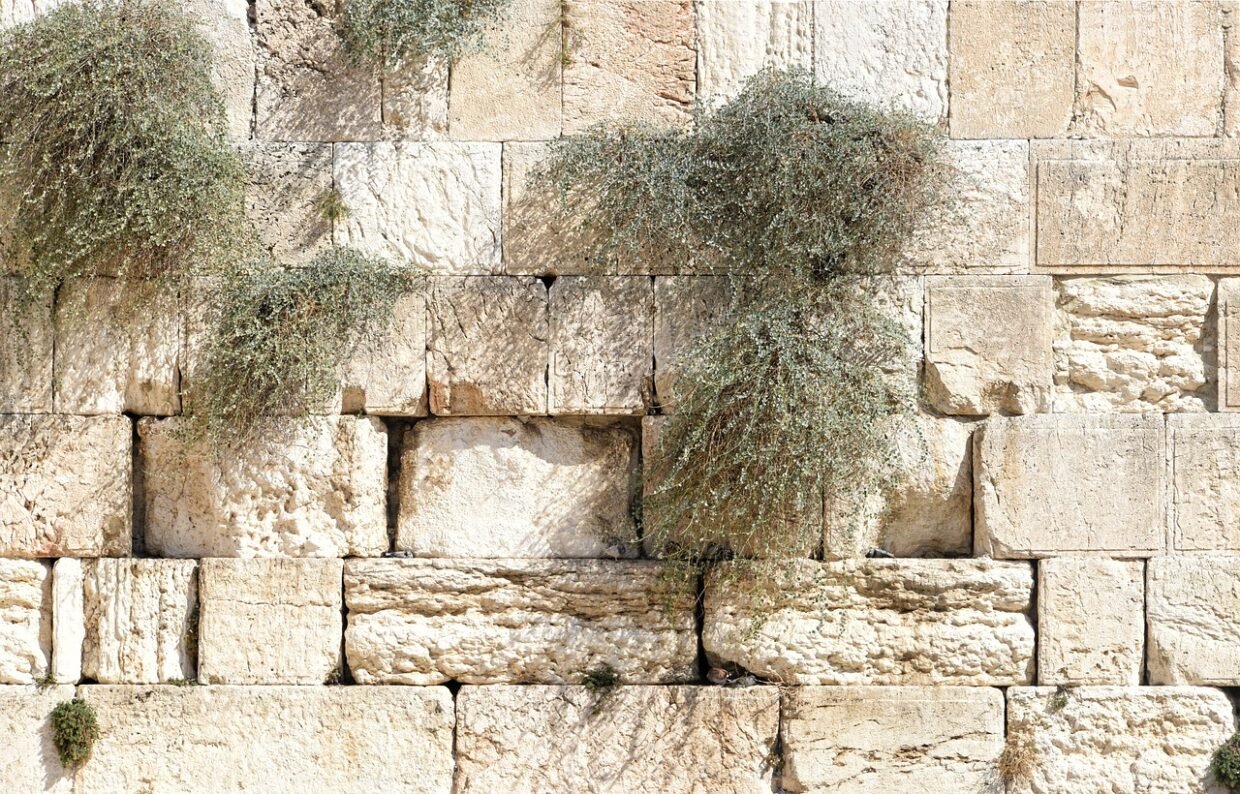
I have a confession to make. I didn’t fast today.
Yes, believe it or not, today was a fast day. Did any of you know?
It’s one of three fasts around the destruction of the First Temple mandated by the prophet Zechariah. The most famous of these comes in the middle of the Summer…who knows that one? Right, Tisha B’av. The 9th day of the Month of Av. On that day, we commemorate the destruction of both the First and Second Temples. But there are two other minor fasts which come before. Our tradition teaches that the destruction of the First Temple didn’t happen all at once. Endings aren’t like that. It was a process.
Today was the fast of the Tenth of Tevet. Asarah b’Tevet. One should fast from sunrise to sunset, from around 5 AM to roughly 5 PM. This date marks the beginning of the siege of Jerusalem by Nebuchadrezzar in the year 589 BCE. The siege would last around two and a half years.
This time was marked by famine and disease within the walls. Eventually, the temple was breached on the 17th of Tammuz in 586 BCE. Yes, you guessed it, another fast day. And so the Temple, along with the Holy of Holies, was finally destroyed on the 9th of Av that same year. In Hebrew it’s called the “Churban.” Nothing would ever be the same.
Why mark this day? No one died. Still the Temple stood. What’s the big deal?
Because endings don’t happen all at once. The 10th of Tevet was the beginning of the end.
God told Ezekiel, “O mortal, record this date, this exact day; for this very day the king of Babylon has laid siege to Jerusalem.” This isn’t guesswork or conjecture, the language is clear. It is so specific that the Tenth of Tevet can even be observed on Shabbat. Yes, like Yom Kippur it can “push off” Shabbat, a day commanded by God for feasting and joy. It’s that important. And as today, if it falls on a Friday leading right up to Shabbat, it is still observed.
Funny thing, the calendar is structured in such a way that it never actually DOES fall on Shabbat. It can’t. But that’s another story for another time. And it wouldn’t matter even if it did! This fast day is so important that even the oneg—the delight—of Shabbat is put on hold.
How is this possible?
First things first. We are strict about this day because beginnings are significant. In the beginning is the root, the shoresh, of all that will follow. The essence of exile, galut, golus, is found in the Tenth of Tevet. Everything unraveled from here in a chain of events that has not stopped until this very day.
Second, the rabbis understood that this fast was singled out by the exact day. That means this day is infused with a divine attribute of judgment or din. Similar to Yom Kippur where we say in the Untetaneh Tokef. “Hineh Yom HaDin” “Today is the day of judgment.” We simply cannot postpone solemn days like these.
And finally, the fast of Tevet is likened to another kind of fast which also preempts Shabbat. Did you know that if you have a nightmare in which you experience vivid visions of death, harm, and woe, you’re supposed to fast the next day? Why? So that you can avert the danger. It’s called the Ta’anis Cholom. a dream fast. If you have a bad dream on a Friday night, you CAN, and even should, fast on Shabbes.
So how are these two things connected?
In a profound way, all of Golus, all of Exile, is one long nightmare from which we have yet to awaken. And when did the nightmare start? The Tenth of Tevet.
You might think this fast is about remembrance and mourning, but that’s not what the rabbis teach. This is about teshuvah, repentance, and tikkun, repair. The destructions we mourn were merely symptoms. Fasting is about getting to the heart of the disease. We have yet to get to the root of the problem that caused the first destruction, and so, each year we fast.
Before the destruction of the First Temple, the Shechinah, the indwelling presence of God, dwelt in Jerusalem. People basked in the faith and light of Adonai. Prophecy was widespread. Everybody—and everybody’s cousin—was a prophet. Miracles happened regularly. There was a wall of fire around Jerusalem and those within lived with a child-like faith and direct knowledge of God and God’s light. This is the light we speak of coming from Zion. We were safe. We were close to God. We were guarded. We cannot even imagine the beauty and purity of those days. And what happened? On the 10th of Tevet when the city was surrounded, the Shechinah herself fled to the desert. Left us. Took off to see if we would repent during the siege, and eventually thirty months later, it all went dark. She has yet to return.
We are still under siege. The same siege. The bad dream, the cholom goes on. We are in Exile. We are vulnerable physically and spiritually. Fragile. What can we do?
There is a story from Rabbi Moshe Weinberger about the Kotzker Rebbe that may help.
The Kotzker lived from 1787-1859. He was a giant of Torah, a trail blazer of Chassidut, a champion of truth who forged Chassidic dynasties. One day the Kotzker, at the peak of his fame, was coming home to Tomoshov, a city near Lublin. The entire Jewish community went to greet him, he had not been home for many years. There was great excitement over his arrival. The question on everyone’s lips was, “Where is the rebbe going to stay?”
As his carriage rode into town, the G’virim, the richest men in town, were vying to have the rebbe stay with them. Of course they were. It would be a prize to host this luminary, right?
When the rebbe stepped from the carriage, the richest man in town, the biggest g’vir, came to him, kissed his hand, and said, “Please rebbe, I would be honored if you will stay with me.” Quietly, the Kotzker said, “No.”
Searching the crowd, the Kotzker sought his old melamed, his elementary school teacher. He went up to the teacher, kissed his hand, and said, “Could I stay by you?” Bear in mind, the melamed was poor, he lived in a small hut, he had little in the way of accommodations, yet here was the great rebbe honoring him. No one could believe it!
The g’vir was insulted. Of course he was. He snarled, “How can you stay with this melamed in a wooden hut with a dirt floor instead of with me?” The Kotzker responded, “Since I left, I’ve studied many things in many ways—Talmud, Mishnah, the Commentators—but the only thing that is absolutely clear to me is the aleph-beis I learned with this man. What have you offered that can compare?”
The repair for the loss of the Shechinah from Jerusalem, the tikkun for the day the lights went out all over the world, is to attach ourselves to God in this same simple and childlike manner. To return to believing that God hears us, knowing that God cares about us. We must remember the faith and love we felt when our mother held us as children. We need to recall the simple emunah of our great-grandparents, our ancestors. They walked in faith. They lived it. They breathed it. They were inside the walls of Jerusalem.
Our fasts will not last forever. They are a process. The prophet Zechariah wrote, “Thus said GOD of Hosts: The fast of the fourth month, the fast of the fifth month, the fast of the seventh month, and the fast of the tenth month shall become occasions for joy and gladness, happy festivals for the House of Judah; but you must love honesty and integrity.”
If we heed his words, our fasts will turn to feasts. Our mourning will turn to joy. A light will shine again from Zion. And the walls around us, and within us, will rise again.