
It has been a week, hasn’t it?
I don’t need to tell you about it—we’ve all lived through it. Some were affected more than others. I know people whose basements were fine, whose drains and pumps worked to protect them. I used my wet-dry vacuum in my basement for a few hours Wednesday night, collecting and pouring out about 300 gallons, and even then, the basement carpeting was ruined. Others were trapped in the subway before it shut down—yes, the entire New York City subway system shut down!—and some people drowned in basement apartments in Queens and even here in Elizabeth. The flooding affected all of us, but in different ways, to different extents. And that’s only one story this week!
The important thing to remember is how we face such crises, how we cope both in the moment and after.
You might hear people talk about despair. It’s easy to fall into that, even to wallow in it, it’s human nature. It’s one thing to be sad or depressed, to be upset by specific things or the world in general, that happens, but we cannot slide into despair—or, as is more often the case, mistake our momentary sadness or fear for despair. Judaism doesn’t allow for that. Really. We as Jews cannot give in to despair—the Torah expressly forbids it, it forbids giving up hope.
But it’s always tempting, isn’t it? It’s easy to blow things out of proportion. There’s a famous quote from Mel Brooks, someone asked him once the difference between tragedy and comedy. It was simple, he said. “Tragedy is, I get a hangnail. Comedy is, you fall in an open sewer and die.”
I hope he was kidding, but either way, this is a great illustration of the importance of perspective. Each of us is the center of our own universe. But we have to remember that we are not the whole universe, we are not the totality. Different people have different contexts, perspectives, reactions. Events affect you differently from me, from Max, from Dave, from your neighbors. My Wednesday night was different from yours, which was different from your cousin’s and so on.
It would have been easy for me to give in Wednesday night, to give up and let the basement flood, to get upset and have a cry, but I did not. It never occurred to me. Taking action to protect my house—to protect my daughter’s bedroom in fact—that was paramount. Nietzsche wrote that “He who has a strong enough Why can bear almost any How.” That was my Why, and we got through the How.
Reading Rabbi Lord Jonathan Sacks reminded me of the story of psychotherapist Victor Frankl who helped save the lives of several of his fellow inmates at Auschwitz. He helped them realize that they each had tasks to perform or missions to fulfill that only they could—this gave them the will to go on, this helped them to survive. Nothing we have faced this week, this year, this decade comes close to what they faced, what they had to endure. It’s easy to forget that, caught up in our own personal universes.
Perspective is important. A hangnail is not a tragedy by any stretch. We need to remember that when it happens to us.
With the anniversary of 9/11 a few days away, I think back and marvel at how we all got through the aftermath. I’m sure you remember where you were that day, that week. I wrote and led a service that very night, we held vigils, we remembered congregants who were lost. And we kept going. Living through an actual tragedy gives you perspective. And perspective can help keep your sadness at bay, it can help you to see it for what it is. Hopefully, most of us have not or will not live through such a tragedy. Many of us—I suspect most of us—have never truly faced despair.
Remember, a hangnail may be painful, but it’s only a minor inconvenience forgotten in a few days.
In such moments, it’s easy to fall back, to think “What have I done to deserve this?” and lament our misfortune, sink into self-pity. Judaism asks us to think instead, “What am I being summoned to do? What am I to do to move forward?” The pain of the past—and at times the present—is a little easier to bear when we focus on the future we are called to build.
In the parashah Nitzavim, Moses—on the last day of his life, a day when it would have been easy to dwell on death, despair, ending—Moses tells the Israelites that they stood before God to enter into the covenant. “I have set before you life and death, good and evil, the blessing and the curse. Choose life that you and your children may live!”
Choose life.
This is about free will and choice. It is left to us to decide. We choose whether to be overwhelmed, to despair, to abandon all hope, or whether to move forward with hope and purpose, to do what we know must be done.
A dear friend of mine just spent time in the hospital with a diagnosis of hypertension, high blood pressure. He hadn’t felt any pain, any symptoms whatsoever, he was just getting a blood pressure check. The nurse looked at his numbers, widened her eyes, and said, “Sir, your blood pressure is elevated.” “How elevated?” “You need to go to the E.R. right now.”
Not only did he go, they admitted him for several days. He never felt pain, no loss of consciousness, nothing. They brought it down, stabilized him with medicine, and released him. It’s only been a few weeks, but he’s changed his whole diet, he’s walking two miles a day on doctor’s orders, and his BP is close to normal again. He could have gotten upset and turned inward—“how could this happen to me?”—he could have frozen, afraid of change, paralyzed with fear or anger or despair—he’s not Jewish, so he’s allowed—but he chose life instead. And I’m glad.
We can all choose life. And we should.
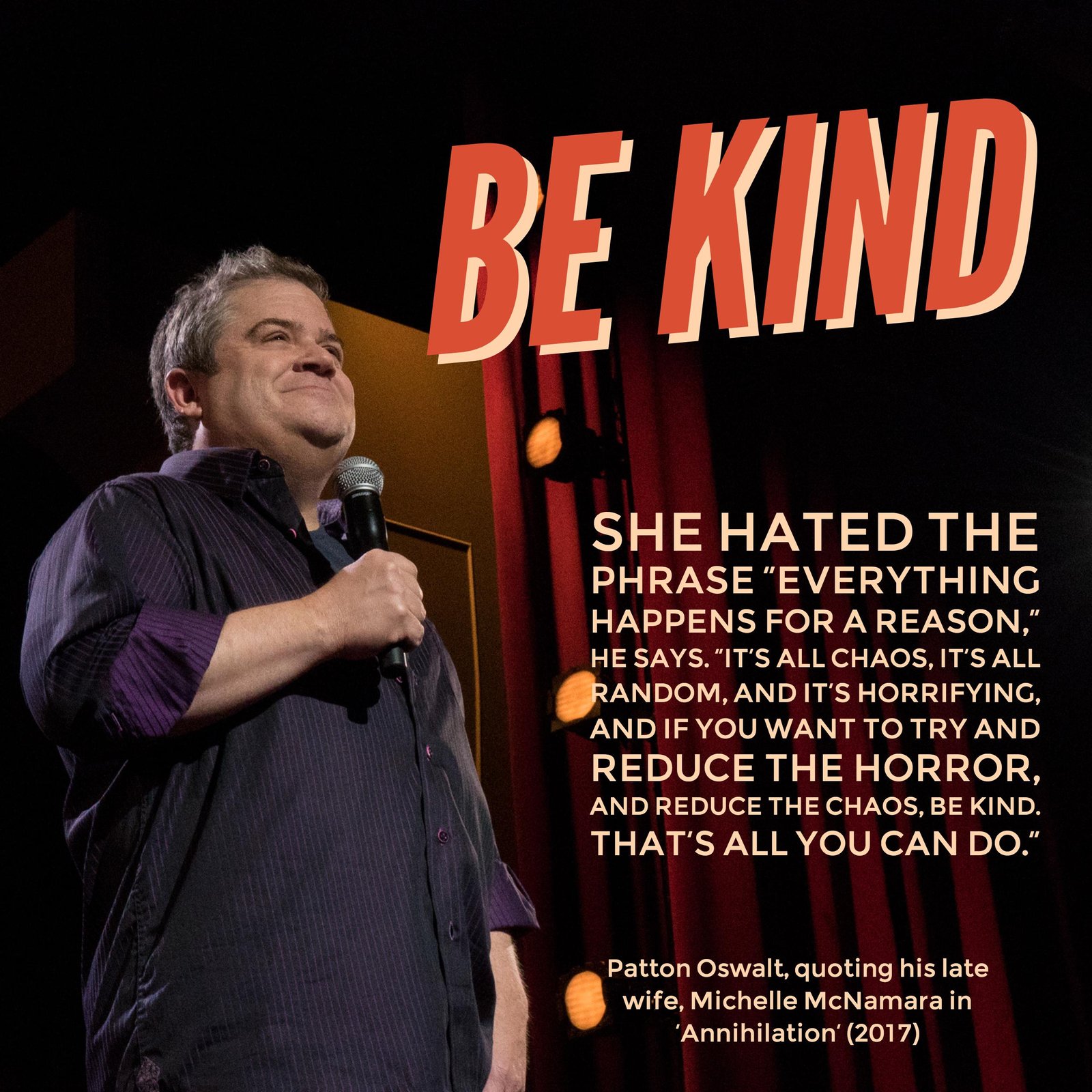
We can’t truly know what anyone else is going through, and we shouldn’t assume. We can’t tell people how to feel, but we can listen to them and try to see their perspective, especially when it’s nothing like our own. Comedian Patton Oswalt often quotes his late wife who taught him this, she liked to say, “It’s chaos out there, be kind.”
We are all getting through this life as best we can. Be kind.
As we are about to leave this year behind, I want to end with this. There was a thirteenth century poet named Avraham Chazzan who wrote a prayer for the moments when the old year passed into the new. Each verse of the prayer ends with this chorus, “May the year and its curses end.” Dark, but understandable. Well, each verse except the final one, the moment when the old rings in the new, and the poem ends with, “May the New Year and its blessings begin.”
No despair, no lament, only hope looking forward.
May we all find blessings where we can, may we keep our sadness in perspective, our hope in motion, may we remember to choose life, and may we all be kind to one another, let that be part of our purpose now and always.